
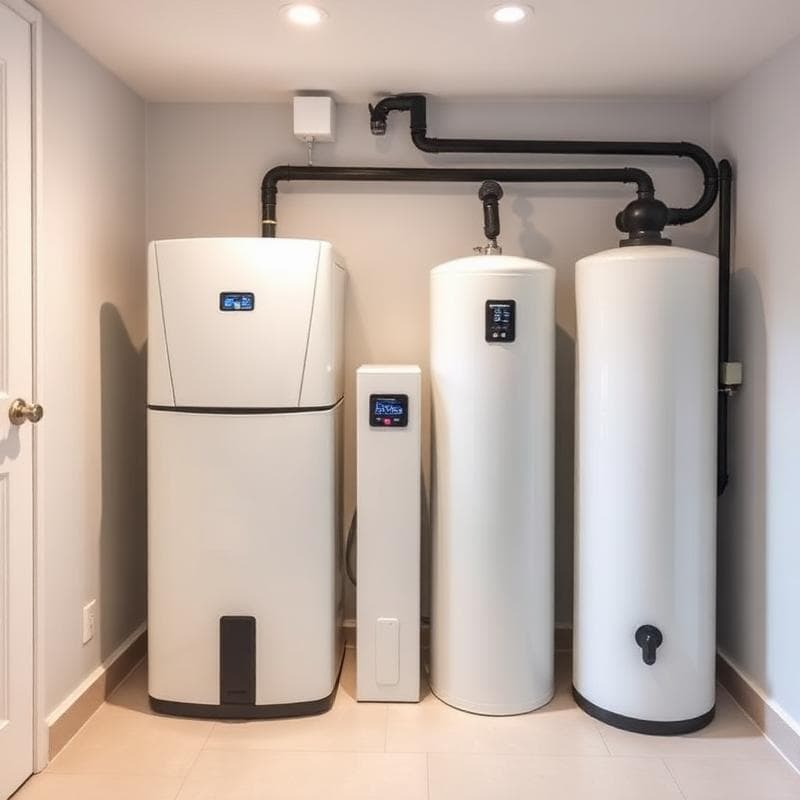
Water Softeners
A hard‑water solution that supports showers, laundry, and appliances—configured around your home and usage.
Overview
A traditional water softener uses ion exchange resin to reduce hardness minerals (commonly calcium and magnesium). In many homes, this helps reduce scale buildup and improves the experience of water for bathing and cleaning.
- Targets hard water—often associated with scale, spots, and reduced appliance efficiency over time
- Typically includes a resin tank and a brine tank for regeneration (system‑dependent)
- Often paired with filtration, depending on water quality
How it works (high level)
1. Ion exchange during use
Water passes through resin beads that exchange hardness minerals for another ion (commonly sodium or potassium, depending on configuration).
2. Regeneration cycle
Over time the resin is refreshed using a brine solution, which restores exchange capacity (system‑dependent).
3. Softened water to the home
Softened water then flows to fixtures, appliances, and showers throughout the house.
When it’s a great fit
- Homes with hard water concerns (scale, spots, buildup on fixtures, reduced soap lather)
- Households aiming to support plumbing and appliance longevity by limiting scale
- People who want a smoother shower/laundry experience in hard water areas
If you’re on a sodium‑restricted diet, ask about configuration options and best practices.
Maintenance (kept simple)
Maintenance is usually straightforward and depends on the softener type and your water hardness.
- Keep salt (or potassium) stocked if your system uses a brine tank
- Periodic system checks and cleaning as recommended by the manufacturer
- Occasional adjustments may be needed if water conditions change
We’ll explain the basics during installation and provide clear next steps.
FAQ
Not sure which solution fits your home? Start with a free consultation and get a clear recommendation.
Schedule Free ConsultationReady to Talk Through Your Options?
Schedule a free water consultation and get a clear recommendation for your home—then decide on next steps when you're ready.